By the Cyber Make team · Last updated October 17, 2026
A 3D printed mask can be the centerpiece of a Halloween costume. It also takes more planning than a small decoration. This guide walks you through picking a file, fitting it to your head, printing it in parts and making it comfortable and safe to wear.
Quick answer: To 3D print a wearable Halloween mask, measure your face, scale the STL to match in your slicer, split it if it is bigger than your print bed, and print it face-up with supports. PETG handles body heat better than PLA. Finish by sanding, painting, and adding straps, padding and clear eye holes.
Start with a mask that suits your printer and your time. A full-head mask can take days. A face mask or half mask is far more manageable two weeks before Halloween.
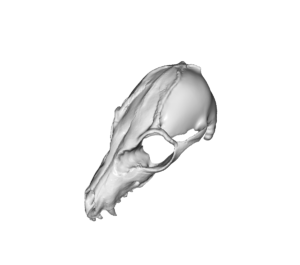
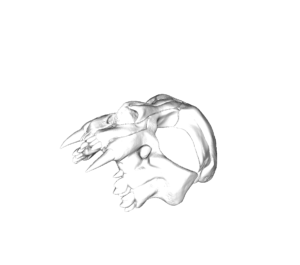
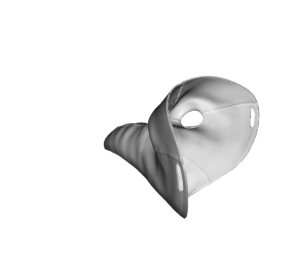
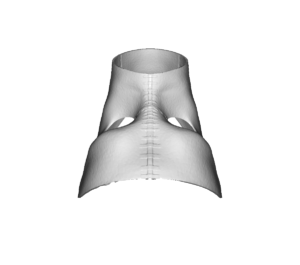
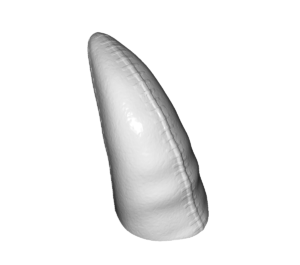
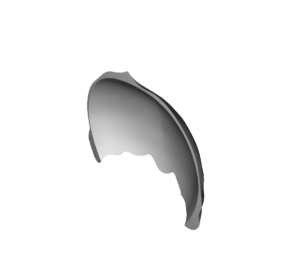
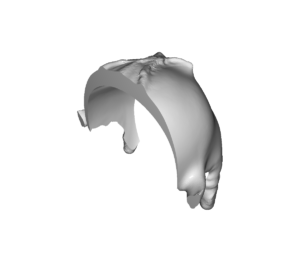
Check three things on the product page: the overall style, whether the file is split into parts, and whether supports are already added. For example, the cat skull mask is available as a whole file and as separate parts like brow, cheeks and cranium. The plague doctor mask comes as an uncut version, a base, a beak and a base with supports. Browse all options in the mask STL files collection.
If you also want decorations to match your costume, our Halloween 3D prints guide covers skulls, pumpkins, ghosts and more.
Most mask files are not made for one exact face size. You need to measure yourself and scale the model before printing. This step decides whether the mask is comfortable or useless.
Always scale uniformly. Stretching only one axis distorts the face and moves the eye holes out of place.
Many printers have a bed around 22 x 22 cm, and a full-size mask can be bigger than that. If the scaled model does not fit, split it into parts and glue them together.
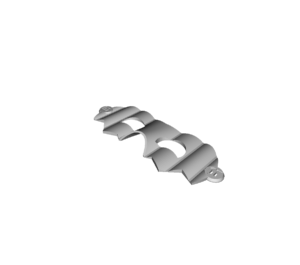
The files below are examples of masks sold as separate parts. Buy every part you need for the full mask, and check each product page to see which pieces belong together.
Print most masks face-up, with the inside of the mask facing the bed. This keeps the visible outer surface smooth. Supports then sit inside the mask, where marks are hidden against your face.
Use tree or organic supports if your slicer has them. They use less material and come off more easily from curved surfaces. Add a brim if the mask has a thin edge touching the bed, to help it stay down.
For long prints, use 0.16–0.2 mm layers for a good balance of detail and time. Three walls and 10–15% infill keep a mask light but strong. A full face mask can take 12–30 hours or more, depending on size and settings, so check the slicer estimate and start early.
Both work, but they behave differently once the mask is on your face. The table compares the two for wearable masks.
| Feature | PLA | PETG |
|---|---|---|
| Ease of printing | Easiest, few failures | A bit harder; more stringing |
| Heat resistance | Softens around 55–60 °C | Softens around 75–80 °C |
| Flexibility | Stiff, can crack if dropped | Slightly flexible, more impact resistant |
| Sanding and painting | Sands easily, paints well | Sands less easily; prime before painting |
| Best use | Display masks, short events | Masks worn for hours or left in a car |
Body heat alone will not melt PLA. But a PLA mask left in a hot car or under strong sun can warp. If you will wear the mask for a full evening, PETG is a safer pick.
A smooth, painted finish hides layer lines and makes the mask look like a real prop. Plan for at least two days of finishing time.
Leave the inside of the mask unpainted or seal it well. Wear a dust mask while sanding, and spray paint in a ventilated area.
Straps hold the mask in place and padding keeps it comfortable. Both are cheap and easy to add.
Safety matters most for a mask, because it covers your eyes, nose and mouth. Check these points before you wear it out.
New to printing large parts? Our beginner guide on how to 3D print an STL file covers slicer basics, and you can find more creepy face pieces in the skull STL files.
A full face mask usually takes 12–30 hours of printing on an FDM printer, sometimes more. Add one or two days for sanding, painting and drying. Split masks take longer in total but each part is a shorter, safer print.
Yes. Pick a file that comes in parts, or cut the model in your slicer. Glue the parts together and fill the seams before painting.
PLA is widely used for costume props and masks. Sand the inside edges, add foam padding and keep holes open for breathing. Stop wearing it if your skin gets irritated.
Resin can capture fine detail, but large resin parts are heavy and more brittle. Uncured resin can also irritate skin, so parts must be fully washed and cured. For wearable masks, FDM in PLA or PETG is usually more practical.